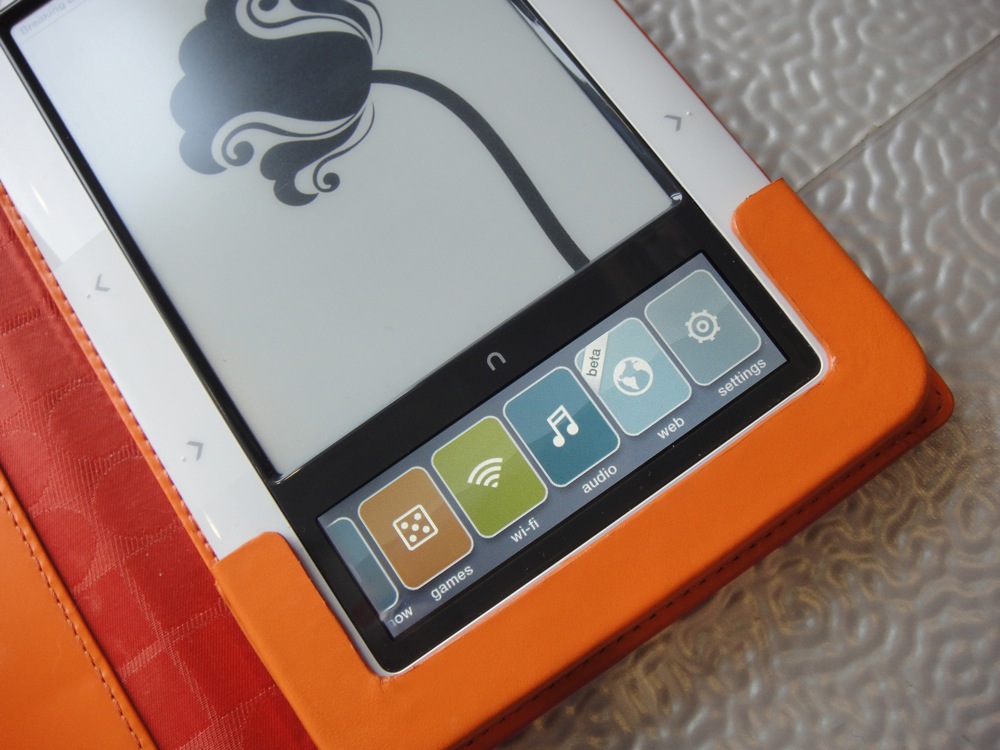
I admit it, I got a little excited when I read the Nook would be getting an (official) web browser. And the Barnes and Noble’s 1.3 software update hit yesterday. In addition to that (beta) web browser, the Android-powered Nook sees some performance and UI enhancements, along with a pair of games, and B&N in-store book reading (free, up to an hour a day).
I grabbed my co-workers Nook yesterday, and my first discovery was that the firmware upgrade isn’t delivered over cellular. As my MiFi has been decommissioned, the lack of available WiFi poised a bit of a problem. Fortunately, B&N provides possibly the simplest download to install option I’ve seen. (Compared to a number unfun GPS and Windows Mobile experiences I’ve had over the years.) Download the package, attach the Nook to PC via USB cable, drag the file into the root directory, unplug the USB cable, watch the Nook update itself.
Of course, my headline is mostly non-sensical as the iPad and Nook exist in somewhat overlapping but mostly distinct functional realms. The iPad does so much, but at the same time not quite enough to meet my productivity needs.
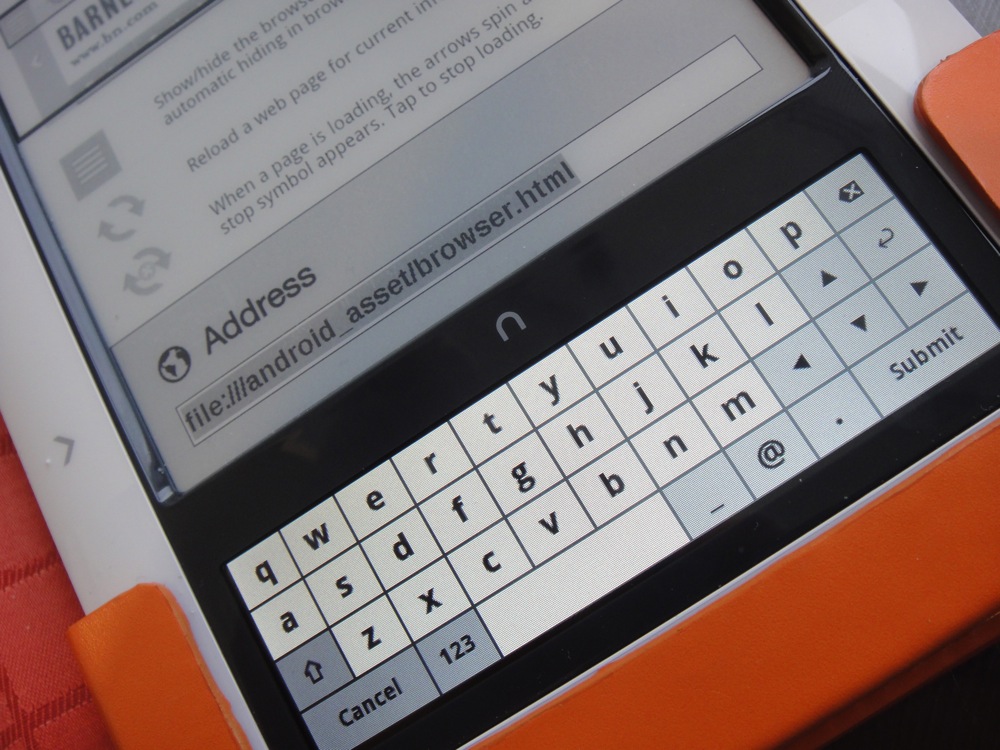
But a web-browsing eReader for half the price of an iPad might hit my content consumption sweet spot. Unfortunately, the browsing experience is weird and inefficient on the Nook as far as I can tell. Again, due to lack of WiFi, I didn’t get much testing in but could immediately sense it’s less than ideal. So now I’m thinking a WiFi-only eReader (dump the cellular, lower the price) with an IMAP email client (mainly for reading or forwarding, limited or no replying) and an RSS reader instead of full on web-browser could be pretty hot.
Related, Amazon has pretty much killed RSS on their platform by charging $2/mo/feed. As a publisher, I’d rather pay them 25 cents a subscriber to get the content out there. As a reader, forget it. It’s not worth the expense if you read more than a few feeds. And speaking of that Kindle, they’ve been awfully quiet on the software front lately…
For a “real” hands on with the updated Nook, head on over to the Mobile Gadgeteer where they’ve put together a 15 minute video and 50 photos.
Click to enlarge:
Not only is the web browser inefficient, despite the sharp and non-fatiguing text of eInk, it’s definitely beta in many ways. From pre-filling the address bar with the local home page file to not recognizing I’m not on WiFi. However, all in all, this is very positive forward movement for their platform. Wonder what Amazon is working on, that physical QWERTY keyboard could come in handy for a variety of tasks.
It’s a big step forward for the Nook. I’m all for more functionality on this thing. While my wife loves reading books on it, I was questioning our investment in this platform recently because after an initial burst of interest when it was new, we don’t use it as much anymore.
Like you said, the beta browser is quirky but shows promise. While not entirely efficient, I like how the color screen shows the full color version of the slice of the page while the eInk shows an entire screen full.
Now if the eInk screen was also a touchscreen…that’d be da bomb.
just like on the Kindle. another lame browser
it sounds like these updates or good but not 100%, but at least updates are coming out fairly regularly. i think any e-ink device has more potential, we just aren’t seeing it yet. check out the e-ink videos that were on engadget the other day – http://goo.gl/TGiP
I think the Nook has a lot of promise, but based on all the reviews I’ve seen I would personally be sitting on my money until I see a review that says they’ve finally got all the kinks out.
There was a recent post on Engadget that perhaps the Nook had outsold the Kindle in March 2010:
http://www.engadget.com/2010/04/26/nook-outsells-kindle-in-march/
I don’t think I believe it–suspect there’s a lot of stocking orders in here or something. But regardless it likely means they’re not that far apart. And Amazon is encouraging this sort of speculation with their policy of not revealing sales numbers for the Kindle.
Regardless, I’m getting an iPad. I just do too much web browsing to want something that only does eBooks. We’ll see whether the gorilla arm or eye strain makes me regret the purchase. I’ll probably be buying books via the Kindle application though…