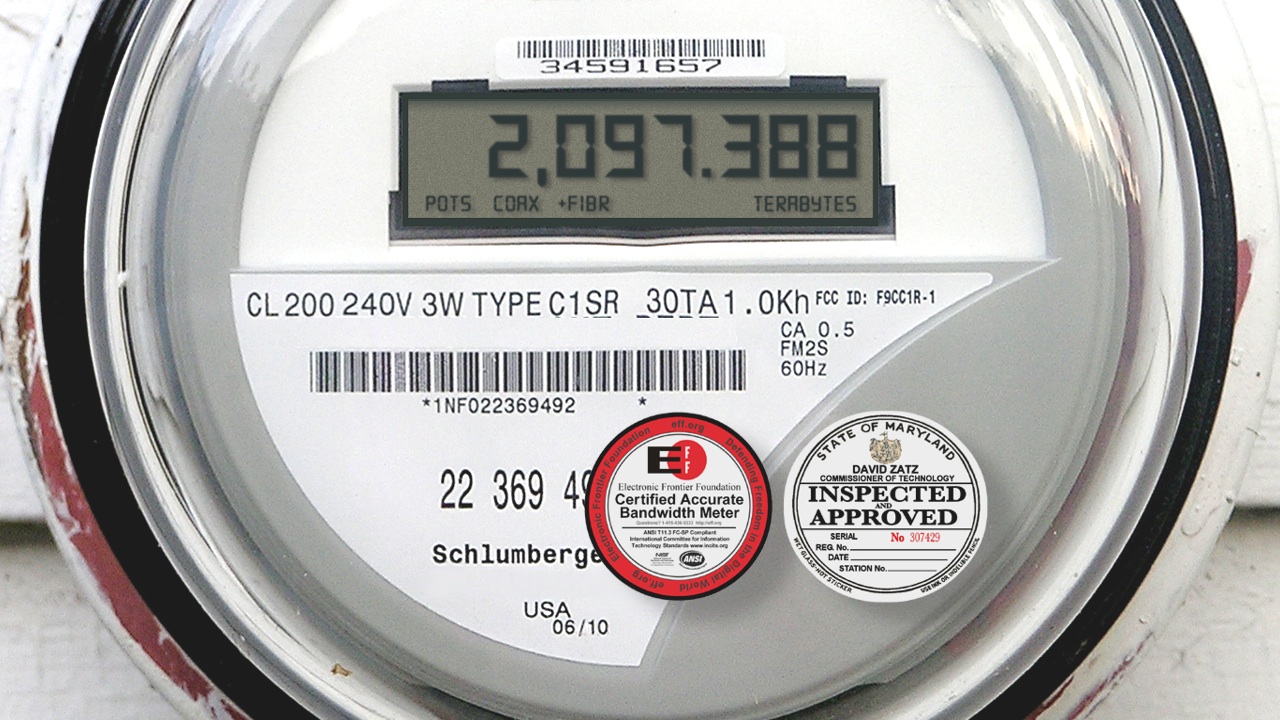
All your digital media goodness.
I can’t say I’m a regular reader of Playboy but, after coming across this juicy nugget, I did indeed pick up the current issue (June 2009)… for the articles. Well, just one little blurb in particular. After talking to Roku, Playboy has concluded “Hulu support is coming” to the $99 set-top box. Could this be the cable freedom Holy Grail we’ve been awaiting? (Assuming Hulu and partners beef up their library.) I gave the Roku folks a quick call and they had nothing to say on the topic. Something us bloggers often liken to an affirmation. Nice! But when?
Click to enlarge:

(Remixed photo sourced from Elizabeth West, Flickr.)
In the aftermath of last week’s Consumer insurrection to testing of bandwidth caps, Time Warner Cable’s Glenn Britt hinted that metered billing was inevitable.
“…We continue to believe that consumption based billing may be the best pricing plan for consumers.”
Now Patrick Knorr of Sunflower Broadband has gone on the record by saying metered bandwidth pricing (including caps and overage fees) are a foregone conclusion. He made this statement Tuesday during a press conference at the American Cable Association’s annual summit in Washington D.C. An especially notable quote by Mr. Knorr was;
“I would like to pay the same price for my heating bill all year round, but I have to pay more in winter, when I use more.”
Both Mr. Knorr and Mr. Britt seem to be implying that Internet Service Providers (ISPs) are the same as the other household utilities like electricity and natural gas. If that is the case, the subject of Consumers being able to monitor their consumption is not the issue at hand, but how that monitoring is done.
The elephant in the room that no one wants to talk about is the utility provider cannot be the one who provides the monitoring tools – it is a conflict of interest.

TechMeme is all atwitter this morning over Microsoft’s launch of Wonderwall. The browser-based app shows a wall of celebrity photos with links to short blurbs and more pics. Kara Swisher says it has “an ‘iPhone’ feel combined with a flipping-through-a-magazine tone.” Others have latched on to Microsoft’s foray into celebrity gossip content. Personally, I think it looks like a weak attempt to emulate the Cooliris platform for scanning photos and video. Slick? Wonderwall feels sadly static to me. Innovative? It’s treading content and platform ground that other companies have already walked.
Microsoft’s Wonderwall is lacking little touches like the feel of movement Cooliris gives when your scroll, and the interface is too busy for my taste. There is an aspect of discovery with the app, as you can click on photos that appeal to you and learn more, but Cooliris executes this function much more cleanly. New discovery categories appear on Cooliris all the time. For example, the top of today’s menu has Valentine ideas for him and her and funny ads (a la the Superbowl) available online. The one downside for some people with Cooliris is that you have to download the application. Compared to Wonderwall, a little downloading is well worth the effort.
Bonus video I found on Cooliris today after the jump: a banned Canadian ad for breast exams.
(more…)
The broadcast digital TV transition could happen in two weeks, or it could get delayed for another four months. In either case, one of the reasons behind the current DTV mess has been difficulty with the converter box coupon program. Retrevo aims to solve that little dilemma with a new coupon exchange program on its site. Having trouble getting your ticket for $40 off an digital-to-analog converter box? Lost your coupon? Left that card lying around past its expiration date? No worries. Visit Retrevo’s DTV page and click the big red “I Need” button. Retrevo will then hook you up with someone who has an extra coupon and arrange delivery. Conversely, if you have an extra coupon, visit the site and click on the big red “I Have” button and perform your mitzvah of the day.
In case you haven’t visited Retrevo before, it’s a great search engine for finding CE specs, reviews, and deals. If you’ve got any money in the bank, now is a great time to scour the bargains on the Retrevo site and pick up an essential gadget or too.
Jan 23 2009

It’s been a year and half since I first wrote about the Verizon Hub, but with launch date details finally confirmed (Feb 1), the Internet is all aflutter about this device. Tech specs are still fuzzy, but what we do know is that this is a cordless phone system with a touchscreen for Internet access and integration with Verizon wireless and VoIP phone services. It’s meant to act as a digital photo frame, note board, family calendar, and widget station all at once. According to a Wall Street Journal article, the broadband phone costs $199 with a two-year contract and a $50 rebate. There’s also – and this is the kicker – a $35 monthly charge.
There are very few things that would make me want to add another large bill to my monthly roster, and I have to question Verizon’s timing on this device. A year and a half ago there weren’t very many IP-based gadgets for the home, but that’s changed, making the Verizon Hub less revolutionary than it might have been. Add that to a disastrous economy, and one has to wonder how many consumers will shell out money for this device.
When I first saw the Verizon Hub, it was also linked to FiOS TV – letting you control TV settings and access the FiOS Media Manager software for viewing your own photos and video on a big screen – but there’s no mention of that now. An oversight? A future feature release?
As a final note, it appears the Verizon Hub may not be the only broadband home device Verizon has in the works. A commenter over at Engadget linked to photos of a “soon to be released” Verizon phone he purportedly saw at an Intel event. A little research finds the device is something called OpenFrame, which Gizmodo covered last summer. It’s hard to imagine that Verizon could have another broadband phone launch planned in the near future. Maybe OpenFrame is headed to another carrier?
For more photos of the Verizon Hub as it looked when Dave & I visited Verizon’s demo room in 2007, click here.
UPDATE: It looks like the Verizon Hub is also made by OpenPeak, the company behind OpenFrame.
Jan 20 2009
There’s no shortage of online destinations for streaming video of today’s presidential inauguration, but I don’t know of any site offering as many different feeds or as much high-def content as CBS. Just in time for the historic presidential swearing-in ceremony, CBS Television Stations has debuted a new Silverlight player with seven (!) live HD feeds. The main feed shows center stage, but you can swap out other streams to view different camera angles. The CBS experience also includes on-demand access to previous inauguration speeches and a live Twitter stream from the editorial staff embedded within the Silverlight player.
It’s interesting that once again we’re seeing a major online event making use of Microsoft Silverlight over the more widely-deployed Adobe Flash platform. (Though it’s important to note, if you don’t want to download Silverlight and the required Move Networks plug-in you can still access two CBS SD streams.) With the combination of major events getting the Silverlight treatment and outfits like Netflix using the technology for HD streaming, MS has made itself a serious competitor in the web video player market.
Want to watch the CBS HD coverage? You can access the CBS Silverlight player on any of the 14 CBS-owned regional stations sites, and it works on both PC and Mac with Explorer, Firefox, and Safari browsers.
Jan 14 2009

Although units began shipping in mid-December (with little fanfare), Digeo CEO Greg Gudorf officially unveiled their long delayed and re-imagined retail Moxi HD DVR ($800) last week at CES. I’ve previously been critical of Digeo’s go-to-market and press/blogger outreach strategies, but I’ve never had a problem with their tech – in fact, the Moxi OS was ahead of it’s time. Making these delays all the more frustrating. So, it’s good to finally see a solid offering available on store shelves. Err, available solely at Amazon.com. In fact, I bet DVR pioneer TiVo is happy to see a bit of competition. Hopefully raising awareness amongst consumers that they’re not limited to cable-co provided set-top boxes. Which is the big challenge facing these guys… After 9 years on the market, while DVR household penetration has skyrocketed, TiVo has fewer than 2 million stand-alone subscribers. In fact, Gudorf pretty much began his talk by proclaiming the Moxi HD DVR is “not a mass market product” – rather, it’s a “premium” offering targeted at 12-15 million digital cable customers.

The Moxi experience is largely unchanged from the demos I’ve attended and the pre-release unit I had in my home back in 2007. The rich, graphical UI is now completely HD, and retains the dual axis navigation. Which in many ways is efficient, but cluttered in others. I still dig the Super Ticker which scrolls Internet-acquired info (weather, scores, etc) along the bottom of your screen like CNN or ESPN. Moxi offers a ton of programming filters, perhaps too many, and provides real-time web-based scheduling and conflict management. A variety of Internet content is accessible from the box, including info/news, Flickr, and Finetune (music). Additionally, you can access your personal MP3s or JPEG images from a Windows PC – with true DLNA support slated for later this year. However, at least initially, Moxi doesn’t have a video on demand partner like an Amazon, CinemaNow, or Netflix. But it’s probably safe to assume movie downloads are on the road map. Moxi provides some advanced functionality not seen on TiVo, such as being able to manually map clear QAM channels. But, on the other hand, the ability to offload video (à la TiVoToGo) is not present.