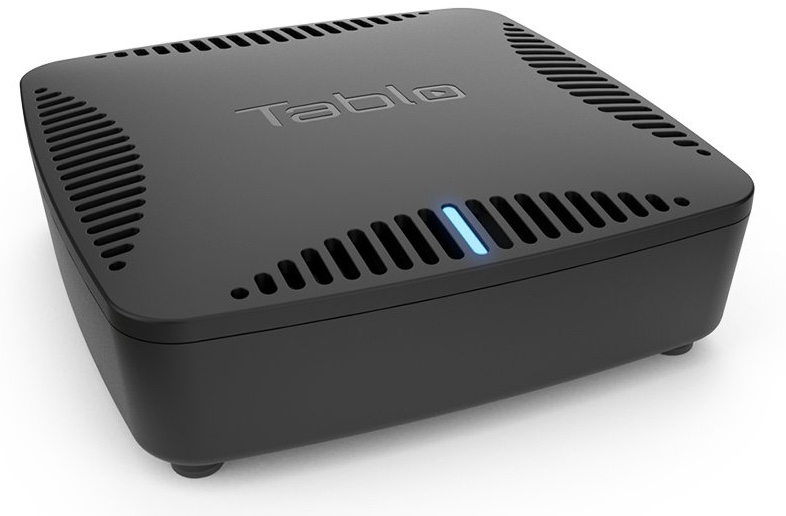
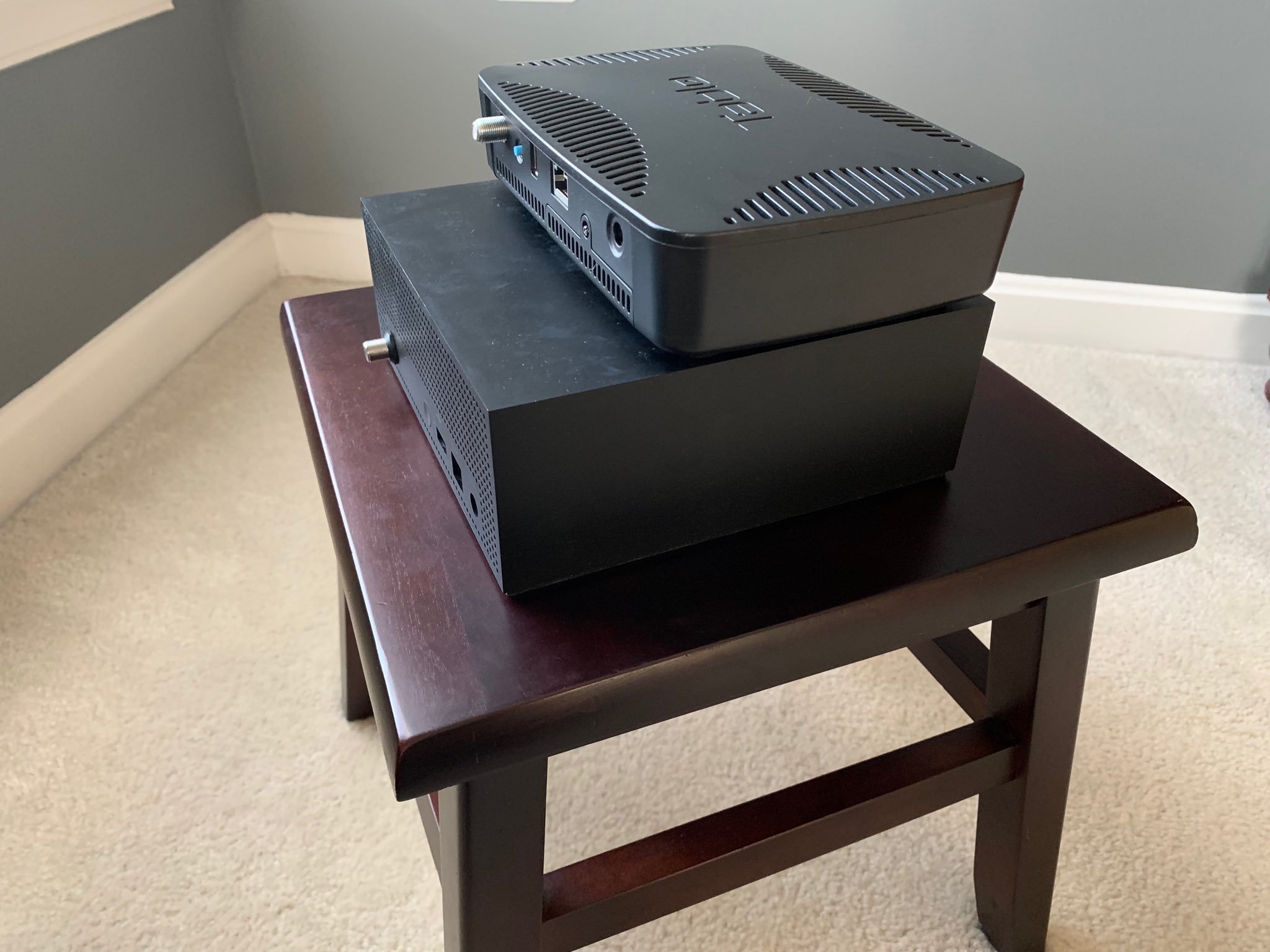
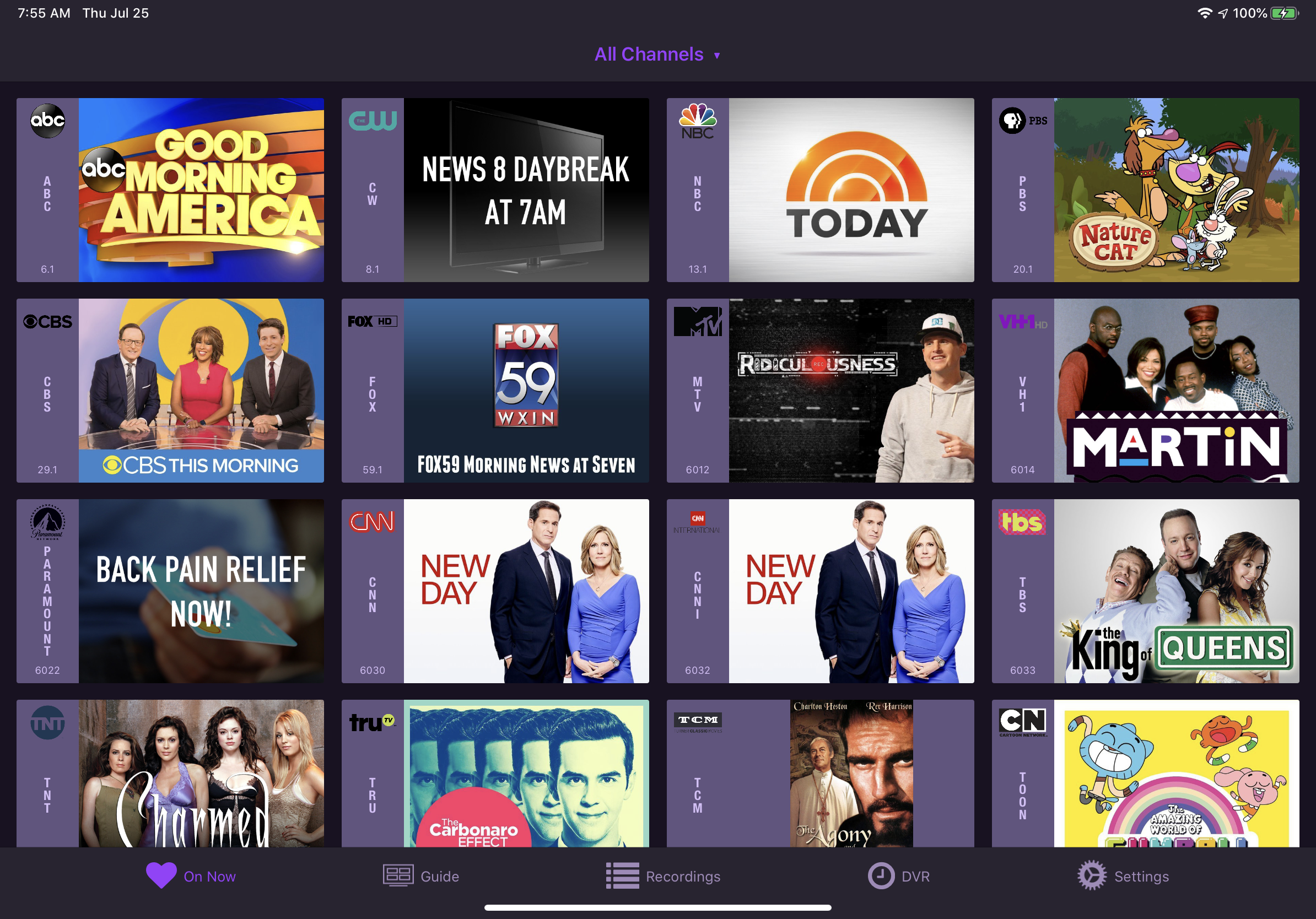
All your digital media goodness.
There’s a ton of soulless marketing department Twitter accounts out there, so it’s refreshing to see some real dialog from project management. As Joe Ambeault offers under the Verizon @FiOSTV banner. And a few days back he essentially confirmed they intend to “certify” several off-the-shelf eSATA drives, such as the 1TB Western Digital solution, to expand DVR recording capacity. Maybe not as timely as customers would have liked, but now you know it’s in the works. A sampling of related tweets:


With the introduction of the TiVo Premiere ($300), it’s no surprise that they’re blowing out excess inventory of prior models. And Woot’s got a decent deal today on the Series3: $169.99 + $5 shipping.
It’s a refurbished unit, but the enclosure will still look better than your Premiere or TiVoHD… with that OLED front panel display. The S3 also includes the higher end Glo remote and provides the freedom to add an eSATA hard drive of your choosing for increased recording capacity. Unfortunately, the Series 3 consumes more power and will require two CableCARDs for dual tuning digital cable. Depending upon your provider, that could result in multiple phone calls and additional fees. Beyond your TiVo subscription, of course. The Premiere, hitting next month, features significantly faster hardware and a new UI. But it’s not yet known how the experience compares.
As for me, I’m hanging on to my original Series3, purchased after review. And intend to swap my TiVo HD for a Lifetimed Premiere when the time is right. Unless I blow it all up for a $1000 3-room Moxi bundle. Or Ceton Media Center solution. Hm.
Thanks for the tip, Jon!
Mar 4 2010

I’ve been covering the TiVo/DISH/EchoStar patent infringement case for years. (With varying degree of interest.) And it looks like we’re that much closer to a conclusion given today’s ruling/affirmation by the United States Court of Appeals for the Federal Circuit:
Appellants (collectively, “EchoStar”) appeal from the district court’s decision finding them in contempt of the court’s permanent injunction order. TiVo Inc. v. Dish Network Corp., 640 F. Supp. 2d 853 (E.D. Tex. 2009). Because we find that the district court did not abuse its discretion in imposing sanctions against EchoStar, we affirm the finding of contempt.
The Premiere may not have moved the needle, but there’s nothing like the prospect of (large sums of) cold, hard cash to whip the investors into a frenzy:

Yes, TiVo should be receiving (additional) cash from DISH and/or EchoStar. And, yes, it looks like a number of DISH DVRs will be disabled. Davis Freeberg and I are still sifting through the ruling to get a better sense of what this ultimately means and if DISH/Echo has any moves left. I’d also keep an eye on Engadget’s resident legal eagle for a more thorough analysis.

TiVo Premiere, er, premiere week continues! And, last night, I was a guest on the EngadgetHD podcast dedicated to TiVo’s launch. Unfortunately, as with my write up, we had a difficult time focusing on what the Premiere offers… versus what it lacks. Of course, we’re not representative of the broader consumer market and have the advantage of being über-geeks, being able to roll our own Windows Media Center alternatives. But what about the typical TV-viewer? Are they willing to pony up for an improvement over the cable-co DVR experience? They haven’t demonstrated it recently…
Which brings up the TiVo Premiere Paradox, a title I’ve swiped from ‘doormat’ on the TiVo Community. (Sorry. Thank you). What is it exactly that holds folks back? For the majority, it’s probably a combination of education and motivation… in realizing there’s an alternative to the cable co and figuring out how to get it done. An upfront fee and an additional, ongoing subscription (beyond the cable-co’s fees) are probably also a barrier to entry. Whether or not it really costs more, long-term. Also, the competition is catching up to TiVo in many cases. Exceeding them in others. (With whole-home DVR and access to free on demand content being the most obvious examples.)
An interesting comment from that Paradox thread, by ‘eisenb11′, that I identify with:
So will I buy the Premier? Maybe. I’m leaning towards it, but it’s going to be begrudgingly and not in a totally excited manner, like when the Series 3 came out.
My response, keeping in mind that I actually reviewed the Series3 for Engadget back in the day:
Yeah, it’s crazy to think back on how much I paid for the S3 and Lifetime. Without TiVoToGo and MRV even! And was excited about it. Compared to how I feel now. Somewhat let down. I’m not sure the Premiere is a big enough splash to get people to defect from their cable provider’s hardware. Or their connected Blu-ray player. Or Roku. In some strange way I feel sad for TiVo. It obviously wasn’t their intent to let many of us down. And I’m not sure they saw this reaction coming. But potential exists… they’ve got smart people, they’ve got solid relationships, they’ve got plenty of cash and probably more on the way. So I’m hopeful that they’ll surprise and impress me over the next 12 months. In the meantime, I’m playing the field a bit more – digging Moxi’s extender and will build a Ceton HTPC whenever that card hits.
So, as we discussed on the EHD podcast last night, I’ll most likely be purchasing a Premiere once the review period concludes. Given what we do here on ZNF. But will you?
I’ve been obsessively following the Moxi HD DVR AVS thread these last few weeks while awaiting my loaner Moxi Mate. (It’s here, I’m pleased.) And it’s amazing the things one finds in the forums. A ding against Moxi, compared to a cableco DVR or TiVo, has been a lack of video-on-demand (VOD) offerings. Now it looks as if that need is about to be addressed. Somewhat. By CinemaNow.
Although Roxio’s CinemaNow on Moxi web page has been pulled. But I’ve been blogging long enough to take a snapshot prior to reaching out to the press relations folks. As I did yesterday. Because things companies aren’t ready to discuss have a tendency to disappear and emails go answered. All reinforced yesterday. And if my chopped up screengrab (above and below) isn’t sufficient evidence of what’s coming, Google’s cache still contains the hard evidence.
While I’m quite happy to see Moxi round out their offering with VOD (in the near future?), the reason I say ’somewhat’ above is due to this little fact from the FAQ:
Haven’t we already been down this path with Amazon and TiVo? It’s 2010 folks, anything other than HD is a disappointment. But, perhaps, this is why Roxio and Moxi(o) aren’t ready to make an announcement. And HD is on the way. I’m crossing my fingers.
Click to enlarge:
Having piloted their “personal TV service” in Los Angeles since November, Sezmi is formally launching into the LA market today via local Best Buy outposts.
Last month at CES, I finally got a look at their product… which pulls together local other-the-air (OTA) programming, premium programming (such as CNN and SyFy) simulcast OTA in select markets, and Internet-sourced content including CinemaNow VOD and YouTube. Their vision is solid, and more holistic than most, likely embodying the future of home entertainment by aggregating multiple content sources within a personalized presentation for each family member (or housemate).
But, based on several beta testimonials, Sezmi’s initial implementation appeared somewhat lacking — typical of many new products. Fortunately, as co-founder and president Phil Wiser shared with ZNF, “We learned a great deal from our pilot customers and rapidly incorporated a variety of changes as a result. We improved the performance of the user interface, included a full screen live TV guide and added in significant reception and signal quality improvements.” He also mentioned the great success of user self installation during the pilot, in terms of ease and efficiency. Something I can definitely get behind after a number of inefficient and frustrating CableCARD install experiences.
The Sezmi package, which consists of a media reciever/DVR, smart array antenna, and remote, runs $300. But a service subscription is also required. $5/month gets you guide data for the locals, access to online content, and the like. Whereas Sezmi Select Plus provides access to the OTA “cable” programming, along with the base service, for $20/mo. Obviously Los Angeles is the first market lit up with premium over-the-air content, via locally licensed spectrum. However, those living on the bleeding edge could possibly order Sezmi online from Best Buy now and activate the lower service tier anywhere else in the US. Until Sezmi officially rolls out nationwide late this spring.
Click to enlarge:

The US patent office must have unpaused their hard drives because, hot on the heels of winning a patent related to closed captions on a DVR, TiVo has been awarded another patent at the heart of the DVR experience. With the application having been originally filed in October of 1999, it took the USPTO over ten years to review and finally approve their ultimate request… And on February 16th, TiVo was given the legal exclusive on what looks like “season pass” prioritization, conflict resolution, and recording.
For those unfamiliar with how a DVR works, part of their magic is the ability to you record shows in the future without having to worry about when they’er on. Back in the ole VCR days, we’d manually instruct our gadget the time and channel we wanted to record. But TiVo and other DVRs automagically keep track of this information and records our programs whenever they’re scheduled to run. Because the TV studios tend to schedule all of their good programming at the same time (I’m looking at you Thursday night), there are often conflicts between what you’d like to record and the number of TV tuners available to do it.
To resolve, or at least reduce, these issues, TiVo created their Season Pass manager to prioritize which shows get recorded and which ones don’t. This helps to make sure that I always get to watch Survivor and CSI, even if it means that I sometimes have to skip Community.
From patent 7,665,111,
The invention correlates an input schedule that tracks the free and occupied time slots for each input source with a space schedule that tracks all currently recorded programs and the programs that have been scheduled to be recorded in the future, to schedule new programs to record and resolve recording conflicts. A program is recorded if at all times between when the recording would be initiated and when it expires, sufficient space is available to hold it. Programs scheduled for recording based on inferred preferences automatically lose all conflict decisions. All scheduling conflicts are resolved as early as possible. Schedule conflicts resulting from the recording of aggregate objects are resolved using the preference weighting of the programs involved. A background scheduler attempts to schedule each preferred program in turn until the list of preferred programs is exhausted or no further opportunity to record is available. A preferred program is scheduled if and only if there are no conflicts with other scheduled programs.